

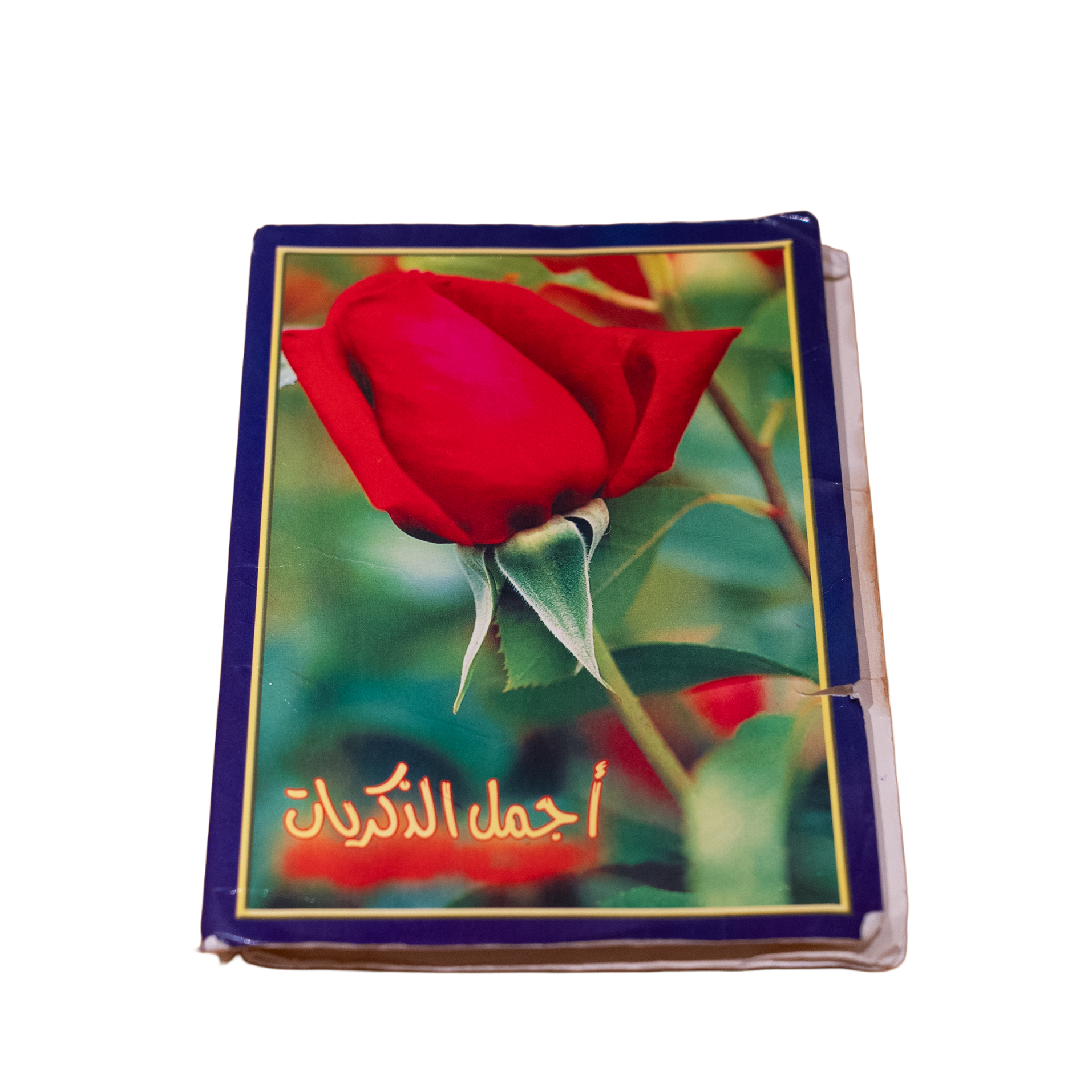
Story:
I was carrying a memory from my childhood, a gift from a friend. It was a photo album, given to me in Aleppo, around the year 2000 or maybe 1999. The story is very old. I don’t know if there is a date written on it, but it is definitely old. At the time, I didn’t know what to do with it or how to use it. I was probably in fifth or sixth grade, around 10 or 11 years old, maybe even younger.
At that age, I didn’t understand what a photo album was meant for, so I simply kept it. Over time, instead of using it for photos, I began using it to store personal items; things that touched me emotionally and carried memories. For example, my childhood girlfriend used to give me letters, and I didn’t know where to keep them, so I placed them in the album, because it could hold objects, not just photographs.
As time passed, the album began to contain objects more deeply connected to my personal memories. Inside it, there is a blood donation slip. It was the first time I experienced what it meant to donate blood and why someone would do that. There is also a tissue from my grandmother and other items I collected over the years.
The friend who gave me the album was with me in school. Today, there is no direct contact between us. He exists indirectly through other friends who were part of that same period in my life. There is a clear sentence written on the album: “The most beautiful memories.” If I am direct, yes, I am keeping the most beautiful memories. My relationship with the person who gave me this album was important, especially because at that time his parents died in an accident. When he gave me this object, I felt its importance. It was very emotional for me. I felt that I needed to keep something from him, as a way of expressing solidarity or support, perhaps in the way a child understands it at that age.
From that point on, the album became a refuge for me. It contains both happy and sad memories. It is connected to emotion, to the city, and to people who were once present in my life and are no longer here. My grandmother, for example, is no longer alive, and the tissue she gave me became a memory of her. There are also other objects connected to people who passed through my life at different stages.
When I decided to leave Aleppo and was gathering my belongings, the first thing that came to my mind was that I had to take this album with me. There were other things that mattered to me, but they were difficult to carry. This album was easy to carry, and at the same time, it held many memories from that period. I am still adding things to it.
I took it with me because it means a great deal to me. When you leave a place, you feel that you might not return to it, and you want to take something with you from there. The strongest connection to the place where you were born or lived is memory. This album is deeply connected to my childhood memories. As you grow older, the details of childhood begin to fade, and this album brings those details back to me. Every object inside it tells me where I was when I took it; what place, what neighborhood, what street. For example, my grandmother’s tissue was not taken at home. It was taken in the street, and I know exactly which street it was.
The album has been with me since childhood, so it felt natural that it would accompany me when I moved to another place.
I left in 2013 because of the war. I did not want to be a participant in death or a tool for producing it. I preferred to be a survivor rather than a participant. My ethics do not allow me to be part of any side that causes people to die. In that sense, I was a survivor more than anything else.
– Adeeb